Russian language as the foundation of educational dialogue: IV International RAFU Conference in figures
Exactly a month ago, on the 13th of October 2026, the IV International Scientific and Practical Conference «Contribution of Universities of Russia and Africa to the Sustainable Development of Regions: The Russian Language as the Foundation of Educational Dialogue» was held at RUDN University. The organizers were the Consortium «Russian-African Network University» (RAFU) and the Institute of the Russian Language of RUDN University. The program brought together issues of inter-university cooperation, the promotion of the Russian language, the training of specialists and the socio-cultural adaptation of African students.
The registration geography covered 20 countries and more than 30 regions of Russia. The mixed format of the event made it possible to bring together the Russian and African academic audience.
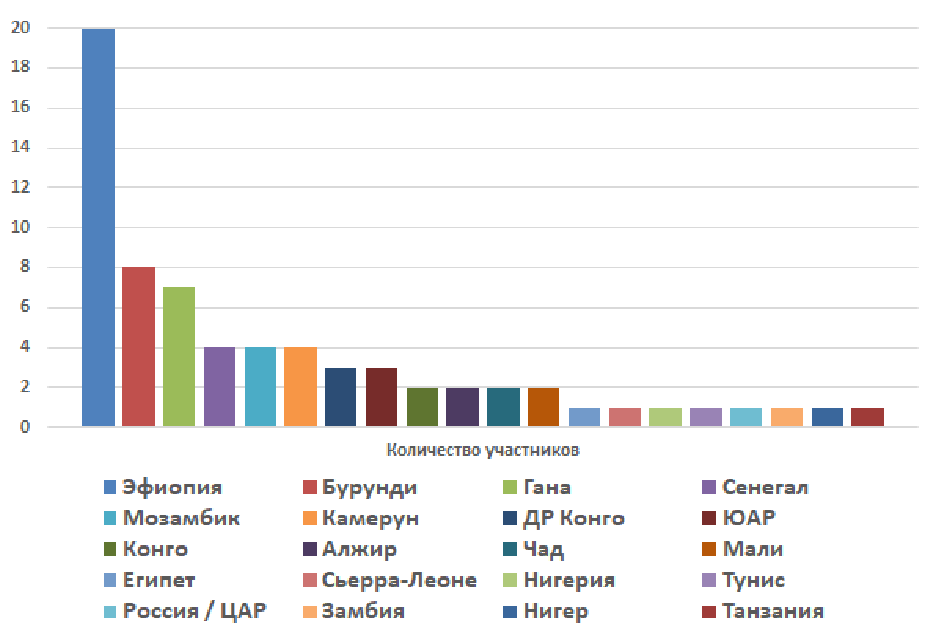 The central theme of the plenary session was the connection between university partnership and sustainable development tasks. The program included presentations by Vice-Rector for International Affairs of RUDN University Marina Rekets on Russian-African educational cooperation and by Head of the RAFU Project Office Alla Mazina on the consortium's contribution to sustainable development. The experience of the transition from educational dialogue to joint research and project practice was presented in the report of Acting Rector of Vologda State University Denis Dvornikov, devoted to cooperation with the International University of East Africa.
 «Any cooperation <…> is always built on the basis of a language platform, <…> because it predetermines the success of communication, it predetermines, both in the direct and in the indirect sense of this expression, the possibility of speaking the same language»,— noted First Vice-Rector — Vice-Rector for Educational Activities of RUDN University Yulia Ebzeeva in her opening remarks.
The African perspective was complemented by the presentations of representatives of the Central African Republic, Niger, Mali and Morocco included in the plenary program. The topics of the speakers' reports covered issues of interaction between education and culture, the teaching of the Russian language in universities and schools, as well as the creation and development of Russian language centres. Thus, educational partnership was considered at different levels – from school preparation to inter-university scientific initiatives.
«This conference provides an ideal opportunity for mutual understanding in the most diverse spheres — from history and science to professional skills, education, the role of universities and diverse talents, because language is above all a key instrument in building human relations and ties with other cultures», — emphasized in his welcoming speech the Ambassador of the Democratic Republic of the Congo (DRC) in Moscow Ivan Vangu Ngimbi.
«Looking to the future, we must recognize the importance of language for strengthening our partnership. The Russian language is not just a means of communication. It opens access to knowledge, scientific research, cultural mutual understanding and professional opportunities. A higher level of proficiency in Russian will help students integrate more effectively into the academic environment and will contribute to research cooperation», — noted First Secretary of the Embassy of Sierra Leone in Moscow Rosetta Mayeli Conteh.
The section program was built around four interconnected directions:
- the Russian language on the African continent: history, present and prospects;
- educational dialogue and academic collaboration of Russian and African universities;
- the Russian language in professional education and the development of the career potential of African specialists;
- pedagogical and socio-cultural aspects of education in the Russian-African dialogue.
A special place in the program was occupied by practical issues: the sustainable functioning of Russian language centres, language barriers in the implementation of joint programs, pre-university preparation and academic mobility. The section on inter-university cooperation brought together the topics of joint scientific projects, the internationalization of higher education and the development of partnership ties.
In the professional block, the Russian language was considered in connection with the training and employment of specialists. The topics of the reports covered the effectiveness of training African students under quotas of the Government of Russia, the influence of language competence on career opportunities, professionally oriented volunteering and overcoming cultural barriers. Separate attention was paid to the role of graduates of Russian universities in strengthening human capital and university cooperation between Russia and Africa.
The digital agenda included mass open online courses, university educational platforms and the use of artificial intelligence in teaching Russian as a foreign language. The program presented approaches to the use of AI tools in pre-university preparation, the creation of educational materials and the adaptation of methodologies to the cultural and educational characteristics of learners.
Along with language and pedagogical issues, the program included scientific and technical topics — from Russian technologies for joint research to geology and the study of natural resources of Ethiopia.
The combination of diverse thematic directions revealed the main idea of the conference: the Russian language is an instrument not only of educational and cultural communication but also of the development of professional and research partnership between universities of Russia and Africa.