RAFU at the 5th Congress of Young Scientists
The 5th Congress of Young Scientists was held on November 26–28, 2025, in Sochi. The event brought together more than 7,000 participants, with applications received from nearly 100 countries around the world. The Congress is Russiaʼs largest platform for scientific and interdisciplinary dialogue and a key event of the Decade of Science and Technology.
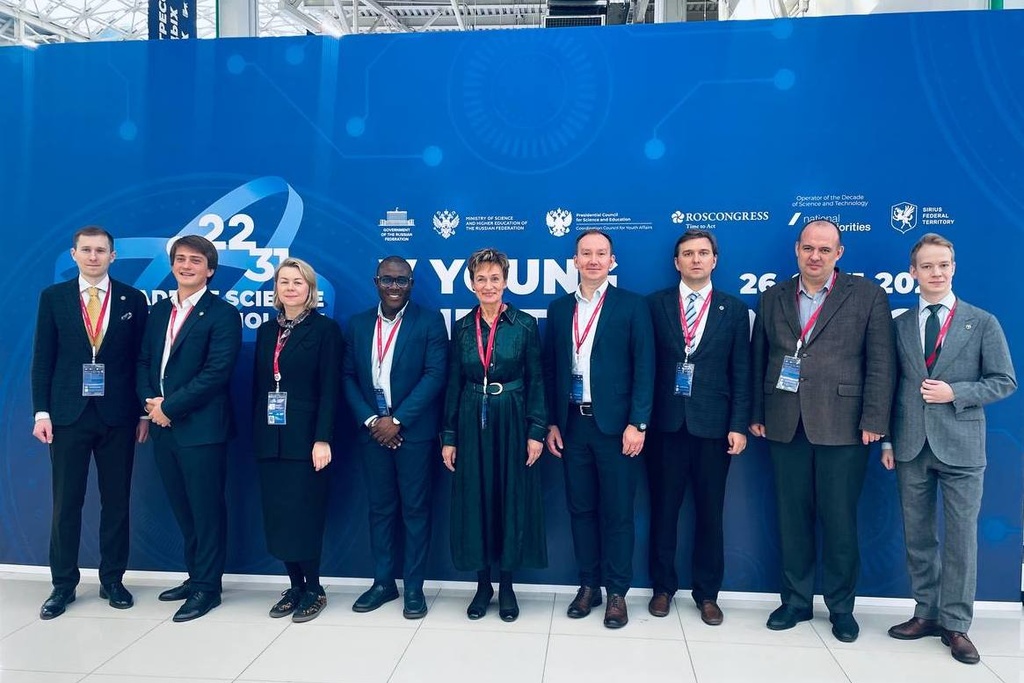
The key event on African matters within the framework of CMU 2025 was the session «Russia-Africa: Opportunities for Applied Scientific Projects, » organized by the Institute of African Studies of the Russian Academy of Sciences, Patrice Lumumba Peoples' Friendship University of Russia, and the Coordinating Council for Youth Affairs in Science and Education. The session was attended by speakers from Russia, South Africa, and Egypt, representing their universities, scientific and other organizations.

The session was opened by Irina Olegovna Abramova, Director of the Institute of African Studies of the Russian Academy of Sciences, Corresponding Member of the Russian Academy of Sciences, Member of the Presidium of the Russian Academy of Sciences, Doctor of Economics, Professor. She told Congress participants about Africaʼs key role in shaping a polycentric world, as well as the productive experience and prospects of Russian-African cooperation. Pavel Anatolyevich Shevtsov, Deputy Head of the Federal Agency for the Commonwealth of Independent States, Compatriots Living Abroad, and International Humanitarian Cooperation (Rossotrudnichestvo), was also a guest at the session.
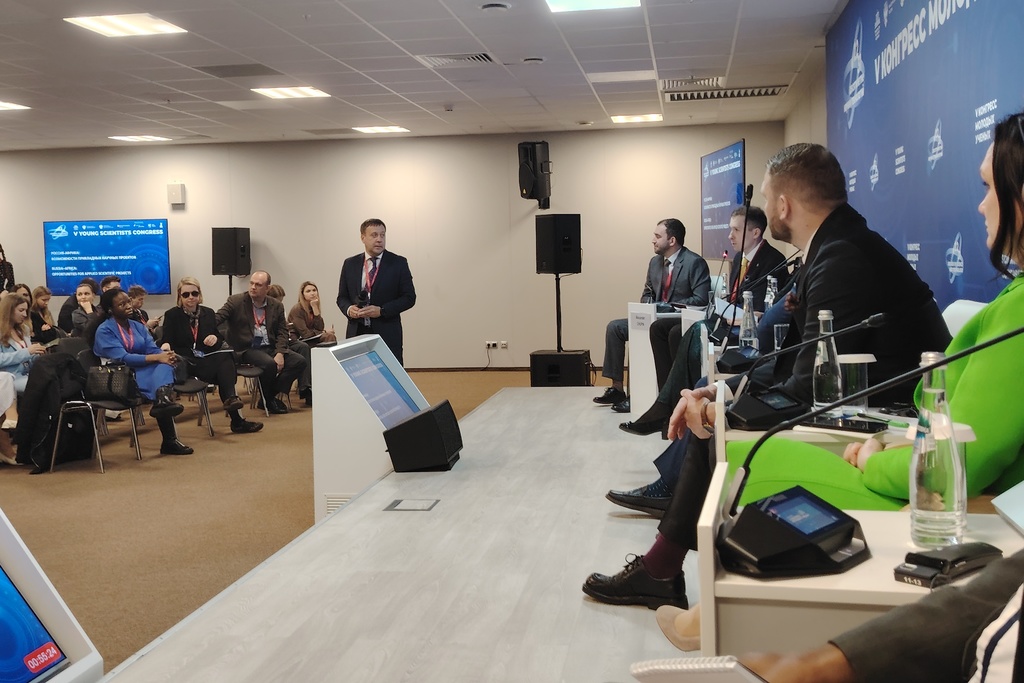
At the invitation of the Institute of Africa of the Russian Academy of Sciences, Maxim Zalivsky, head of the RAFU project office, took part in the session.

During the session, particular attention was paid to the development of joint scientific research, specialist exchange programmes and the practical implementation of the results of developments obtained within the framework of international projects of significant interest to both sides. Participants discussed key trends and challenges facing modern science, as well as practical steps to adapt technologies and scientific solutions to the needs of Russia and African countries. Particular emphasis was placed on the role of young people in strengthening Russian-African scientific cooperation and on specific mechanisms to support it, including the organization of joint youth scientific events and programs, the development of academic mobility and internships, coordination of interaction between associations of young scientists, support for joint scientific publications and research, and expansion of network cooperation, including on the basis of RAFU. In addition, the discussion touched upon promising areas of scientific research that are actively developing in Russia and African countries, existing measures of state and international support for science, opportunities for implementing joint scientific research projects, and the most effective mechanisms of scientific diplomacy for forming sustainable ties between young scientists from the two regions.

The following components are important for Russiaʼs success in Africa: prioritization and interdepartmental coordination. Yes, Russia is known and positively perceived in Africa as a country with high-quality education, that we share classic human values, and that we have never acted as colonizers, not to mention that in many African countries, the word «Russia» is synonymous with the name of our president. At the same time, prioritization will allow, on the one hand, to direct Russiaʼs available resources towards cooperation with priority countries and regions, and interdepartmental coordination of actions and measures implemented by the Ministry of Education and Science of Russia, the Ministry of Education of Russia, Rossotrudnichestvo, and individual universities and organizations will make it possible to effectively allocate resources for work with a particular country, as well as to develop an effective plan for the activities themselves,» noted Maxim Zalivsky, head of the RAFU project office, in his report.