New RAFU member — Vologda State University and Uganda: AI for fish farming and bridges of cooperation
Vologda State University (VSU) and the International University of East Africa (Uganda) have launched a joint project to develop an intelligent system for monitoring and optimizing fish farming. This innovative AI-based tool is designed to solve aquaculture problems both in the Russian North and in the equatorial waters of Africa. The project was made possible with the support of the Vologda Region Government.
The project is also being implemented in the context of the development of the Russian-African Network University (RAFU). Already in the first months after joining RAFU, VSU has demonstrated practical results of network interaction, moving from formal participation to the implementation of specific scientific and technological projects with African partners.

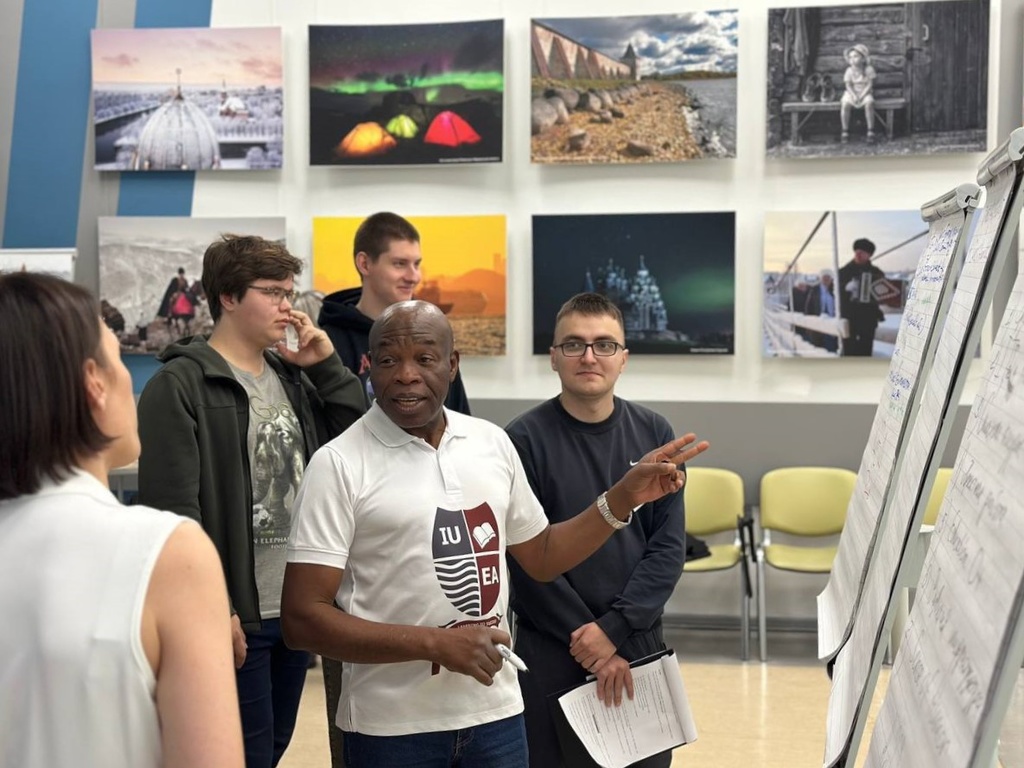
The working phase of the project kicked off in the Vologda region. An international team of young scientists visited local aquaculture businesses (fish farming in artificial ponds) and held a strategy session with engineers and leaders in the fishing industry. The delegation from Uganda was led by Dr. Emeka Akaezuwa, Rector of the International University of East Africa and a recognized expert in the field of digital technologies.

The project combines scientific, educational, and humanitarian goals. During their two weeks in Vologda, participants not only made progress on their research agenda, but also actively participated in university life at Vologda State University. An interesting event was a meeting of the Vologda branch of the Izborsk Club "Russian Lad," where well-known analysts Mikhail Khazin and Mikhail Delyagin gave presentations.

The delegation also held talks with Ekaterina Tselikova, Deputy Governor of the Vologda Region, who oversees science and education, and Stepan Sokolov, Deputy Director of the Department of International Cooperation at the Russian Ministry of Education and Science.

A separate item on the agenda was a meeting with representatives of Yandex. Experts from the digital giant familiarized themselves in detail with the concept of the system under development and gave the international team a tour of their creative workspaces.

An important part of the visit was introducing the guests to the historical and cultural heritage. Ugandan scientists visited the Kirillo-Belozersky Monastery and the Ferapontovo Architectural and Ethnographic Museum, monuments of the Russian North, and also visited the Moscow Conservatory, discovering the cultural riches of Russia.

The educational aspect of the cooperation was implemented through public lectures by Rector Emeka Akezuva on the development of science and education in Africa. The events took place at VSU and at the Moscow representative office of the Vologda Region. During the discussions, participants discussed the evolution of Russian-African relations and prospects for their development.
The significance of the project has been highly recognized at the state level. At the 45th meeting of the Council of Heads of Constituent Entities of the Russian Federation under the Russian Ministry of Foreign Affairs, Foreign Minister Sergey Lavrov, after hearing a report by Vologda Region Governor Georgy Filimonov, particularly noted the need to share the region's experience in international cooperation with African countries.

Currently, work on the project continues remotely. A key upcoming event will be a return visit by a VSU delegation to Uganda, scheduled for April 2026. The trip will allow for field research to be conducted on African territory and will deepen the integration of the two universities' educational programs.

As emphasized by Denis Dvornikov, Acting Rector of VSU and Candidate of Legal Sciences, the project addresses two strategic objectives: "First, it allows colleagues to get acquainted with the multifaceted Russian culture through personal experience — not only through monuments, but also through communication with people and understanding common values: hard work, creativity, family, and community. Second, it is an invaluable experience for our team: young scientists from Vologda have realized that they can change the world for the better — from Lake Beloye to Lake Victoria."

The Russian-African Network University (RAFU) has long been focusing on developing educational cooperation in the field of artificial intelligence and robotics. In this context, it is worth noting the rapidly developing project with the Republic of Mali. The project of Vologda State University once again confirms the desire of African countries for digital development, as well as for expanding cooperation with Russia in scientific and educational projects related to modern digital technologies.